
The Definitive Guide to Interior House Painting
By Brush & Build Brothers ·
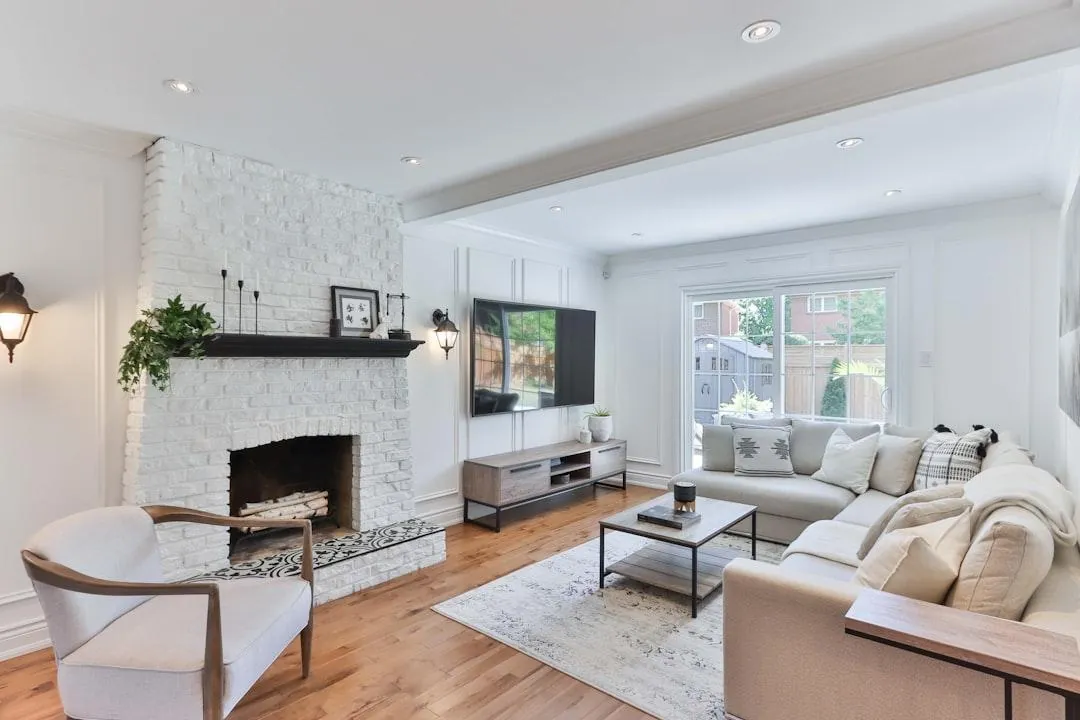
What You Need to Know About Interior House Painting
Interior house painting is one of the fastest, most affordable ways to transform your home, but costs, timelines and quality vary widely depending on who you hire and what your project involves. Here's a quick overview before we dive in:
| What You Want to Know | Quick Answer |
|---|---|
| Typical price | About $2 to $6 per square foot of paintable area |
| Average whole-interior job | Roughly $2,000 to $3,800 nationally, depending on the source |
| How long it takes | 1 to 2 days for a single room; 3 to 5 days for an average 3-bedroom home |
| What's included | Surface prep, priming, painting, cleanup and a final walkthrough |
| Best finish for walls | Eggshell or satin for most rooms |
| DIY vs. professional | Professionals save time and deliver cleaner, longer-lasting results |
Few home improvements deliver as much visual impact as a fresh coat of paint. A single project can make a dated room feel completely new, without replacing a single piece of furniture.
But here's what most homeowners don't realize upfront: the final price, quality and experience depend almost entirely on decisions made before a brush ever touches a wall. Choosing the wrong contractor, skipping surface prep or picking the wrong finish can turn a simple refresh into a costly redo.
This guide covers what you need to know, from realistic pricing and what a professional job includes to color selection, finish types and how to get an accurate estimate for your home.
Understanding the Cost of Interior House Painting

When planning an interior house painting project, budget is usually the first thing on everyone's mind. National figures vary by source: NerdWallet, citing 2026 data from Angi, puts the average interior paint job at about $2,000, while PermitDeck puts the national average closer to $3,800. Because every home is different, most professional painters price by the square foot of paintable area, generally $2 to $6 per square foot.
For room-by-room ranges and how painters measure wall area, see our guide to interior painting cost per square foot.
Key Factors That Influence Your Estimate
Why is there such a wide range in pricing? Because professional painters don't just look at floor space. When building an estimate, they weigh several variables:
- Room size and layout: larger rooms need more paint and labor. Rooms with many doors and windows require careful cutting-in, which takes extra time.
- Ceiling height: standard 8-foot ceilings are straightforward. Vaulted, tray or cathedral ceilings call for specialty ladders, scaffolding and extra safety precautions, which raises labor cost.
- Paint type and quality: premium, durable, low-VOC paints cost more per gallon upfront, but they cover better (often in fewer coats) and last longer.
- Surface condition: are your walls flawless, or do they look like they've survived a few indoor soccer matches? Repairing cracked drywall, fixing nail pops, removing old wallpaper and sanding rough spots all add prep labor.
- Special features: crown molding, baseboards, built-in shelving, mantels and window trim require precision and smaller brushes, which increases the overall cost.
To see what a professional job looks like in your area, explore our Interior Painting in Charlotte service.
Regional Pricing Variations
Location matters too. Labor is the biggest part of any painting quote, so local wage rates move the price more than the paint does. North Carolina is one of the more affordable states: PermitDeck puts the average interior painting project here at $3,011, against a national average of about $3,843.
Within the Charlotte metro, pricing stays competitive but still depends on local labor rates, the season and how much prep your home needs. The only way to know your number is an on-site estimate.
The Professional Painting Process and Timeline
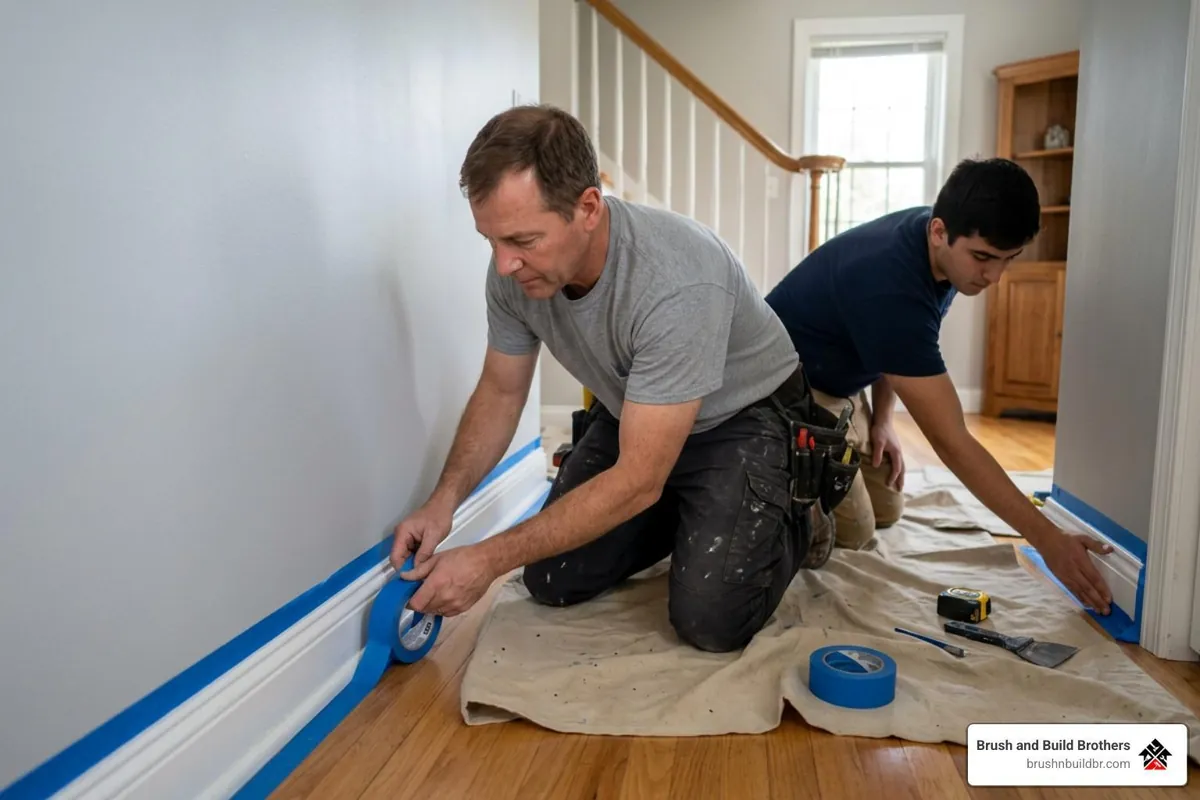
A truly great paint job is mostly preparation. If a painter walks into your home and immediately starts rolling paint onto the walls without touching sandpaper or tape, that is a major red flag.
What Is Included in Professional Interior House Painting?
When you hire a quality professional crew, your estimate should cover a multi-step process designed to protect your home and deliver a clean finish:
- Setup and protection: heavy furniture is moved to the center of the room and covered with clean plastic sheeting. Floors and walkways are protected with drop cloths or protective paper.
- Surface preparation: this is where the magic happens. Rough areas are scuff-sanded, nail holes filled, minor drywall cracks and nail pops patched, and gaps along trim and baseboards caulked for clean lines.
- Priming: repaired drywall, water stains and dramatic color changes (like going from deep navy to soft cream) get a coat of primer so the topcoat adheres well and the color stays uniform.
- Paint application: premium paint goes on with professional brushes and rollers. Many pros back-roll: they apply a uniform wet coat, then lightly roll back over it to even out the texture.
- Cleanup: tape and plastic come down, floors are vacuumed or swept, and furniture goes back where it belongs.
- Final walkthrough: you walk the finished space with the crew to inspect every corner before the job is closed out.
Homeowners in the Matthews area can learn more on our Interior Painting in Matthews page.
Project Timelines: How Long Does It Take?
Having painters in your home disrupts your routine, so it helps to know what to expect:
- Single room: typically 1 to 2 days, which allows time for prep, two coats of paint and full drying between coats.
- Average 3-bedroom home: usually 3 to 5 days for a full interior repaint, including walls, trim and ceilings.
- Larger homes or complex projects: a week or more, especially with kitchen cabinets, popcorn ceiling removal or extensive drywall repairs.
If you're in Mint Hill, see our Interior Painting in Mint Hill page.
Design Choices: Selecting Colors and Finishes
Choosing your paint color is only half the battle. You also have to choose the right finish (or sheen) for each room. The finish determines how shiny your walls look, how easily they clean and how well they hide minor imperfections.
Choosing the Right Paint Finish for Every Room
Here's a quick cheat sheet:
- Flat / matte: no shine. Excellent at hiding wall bumps, nail pops and minor drywall imperfections. It's harder to scrub, so it's best for low-traffic areas like ceilings and adult bedrooms.
- Eggshell: very low luster, like the shell of an egg. The go-to for living rooms, dining rooms and entryways because it balances a soft look with decent durability.
- Satin: slightly shinier than eggshell and highly washable, which makes it a good fit for kids' bedrooms, family rooms and hallways.
- Semi-gloss: sleek and moisture- and stain-resistant, the usual choice for kitchens, bathrooms, baseboards and trim.
- High-gloss: extremely shiny and durable, but it highlights every imperfection, so prep must be flawless. Mostly used to make front doors and cabinets pop with a lacquered look.
Planning a project in the northern suburbs? See our Interior Painting in Huntersville page.
Color Psychology and Selection Best Practices
Color has a real impact on how a room feels. Paint is one of the most powerful tools for changing the mood of a space without any structural remodeling.
- To make a room feel bigger: choose light, neutral tones and minimize the contrast between walls and furniture so the eye travels smoothly across the space.
- To create an intimate space: deep, rich tones like navy, forest green or charcoal recede visually and make large, drafty rooms feel cozy and anchored.
- Testing is critical: never pick paint from a tiny paper swatch under store lighting. Test colors on large sample boards or directly on your walls, and look at them in morning sun, afternoon shade and under your own bulbs at night before deciding.
In Concord? Visit our Interior Painting in Concord page.
Preparing Your Home for the Project
Once you've booked your project and picked your colors, a little preparation on your side helps the job run smoothly and quickly.
How Homeowners Should Prepare for Paint Day
Professional painters do the heavy lifting, but a few things help the crew get straight to work:
- Clear the walls: remove paintings, mirrors, clocks and wall decorations.
- Protect your valuables: move small, fragile or valuable items (like heirlooms or electronics) to a room that isn't being painted.
- Clear the floor: pick up toys, shoes, rugs and pet bowls from the work area.
- Secure your pets: ladders, rustling plastic and new people can stress pets. Keep them in a separate room or arrange for them to stay with a friend.
Homeowners in the Kannapolis area can find us on our Interior Painting in Kannapolis page.
DIY vs. Professional Interior House Painting
It's tempting to look at a gallon of paint and think, 'I can do that myself this weekend.' DIY painting is certainly possible, but it helps to weigh the true costs first.
A professional-grade finish takes more than a cheap brush and a tray. A proper setup typically includes:
- Premium angled sash brushes for crisp cut-in lines
- High-capacity, lint-free roller covers and heavy-duty roller frames
- Sturdy extension poles and professional ladders
- Drywall patching compound, sanding blocks and quality caulk
- Canvas drop cloths and professional painter's tape
If you enjoy the work and have the patience for meticulous prep, DIY can be a fun project. But if you want perfectly straight ceiling lines, invisible drywall repairs and your weekends back, hiring a professional crew is the way to go.
If you live in Belmont, see our Interior Painting in Belmont page.
Frequently Asked Questions
What warranties should professional painters offer?
A reputable painting company stands behind its work with a written workmanship warranty. It typically covers peeling, bubbling or premature flaking caused by poor surface preparation or application.
Ask for a written copy and check the exclusions, such as damage from settling, water leaks or normal wear and tear. Our work carries a 1-year workmanship warranty. Homeowners in the Monroe area can learn more on our Interior Painting in Monroe page.
How can I get an accurate estimate for my project?
The best way to get an accurate estimate is an on-site walkthrough. In person, an estimator can check the condition of your walls, measure ceiling heights, spot areas that need drywall repair and discuss your color goals, so there are no surprise costs later.
In Ballantyne, you can request an estimate through our Interior Painting in Ballantyne page.
Are modern interior paints safe to breathe?
The industry has made big strides here. Many high-quality paints are formulated as low-VOC (volatile organic compounds) or zero-VOC, so they give off far less odor than older paints. For background on how VOCs affect indoor air, see the U.S. EPA's overview of volatile organic compounds.
Even with low-VOC paint, good ventilation during and right after the project helps the room clear quickly. Residents of Mount Holly can find us on our Interior Painting in Mount Holly page.
Conclusion
A good interior paint job does more than change the color of your walls. It refreshes how your home feels every day, protects its surfaces and can add to its appeal when you sell.
At Brush & Build Brothers, we serve homeowners across the Charlotte area, including Charlotte, Matthews, Mint Hill, Pineville, Huntersville, Concord, Kannapolis, Belmont, Mount Holly, Monroe, Locust and Ballantyne. We combine premium materials, careful surface preparation and expert craftsmanship, and we back our work with a 1-year workmanship warranty.
Ready to fall in love with your home all over again? Schedule a free estimate for interior painting with Brush & Build Brothers today.