
Is Your Painter Overcharging? A Guide to Interior Painting Costs per Square Foot
By Brush & Build Brothers ·
Is Your Painter Charging You Fairly? What Interior Painting Actually Costs
The average cost of interior painting per sq ft is generally $2 to $6 per square foot, depending on what's being painted, where you live and the quality of materials (NerdWallet). Here's a quick reference before we dig in:
| Benchmark | Figure | Source |
|---|---|---|
| Typical price per square foot | $2 – $6 | NerdWallet |
| Average interior paint job, U.S. | About $2,000 | NerdWallet, citing 2026 Angi data |
| Average interior project, U.S. | About $3,843 | PermitDeck |
| Average interior project, North Carolina | About $3,011 | PermitDeck |
So you've got a quote in hand. Does it feel too high? Or suspiciously low?
Most Charlotte-area homeowners have no reliable way to tell. Estimates swing widely depending on how a contractor measures your space, which paint they plan to use and how much prep work they're actually including. A low number upfront doesn't always mean a good deal.
This guide breaks down what drives the price per square foot, so you can spot a fair quote, avoid overpaying and know what to ask before you sign anything.
Understanding the Average Cost of Interior Painting per Sq Ft
When you gather quotes, you'll notice painters talk a lot about square footage. There's a common trap here: confusing floor square footage with wall surface square footage.
If you live in a 2,000-square-foot home, that number is your floor area. But painters aren't painting your floors (unless you have some very unusual design ideas). They're painting walls, which often add up to roughly three times the floor area.
National figures give you a baseline. NerdWallet puts interior painting at $2 to $6 per square foot and, citing 2026 data from Angi, the average interior paint job at about $2,000. PermitDeck puts the national average project at about $3,843. Where your project lands depends on scope: walls only, walls and ceilings, or a full package with trim and doors.
Most of what you pay for is labor: prep work and painting time. Paint, primer, tape, masking paper and equipment make up the smaller share.
To see how this applies to your home, read more about our professional interior painting services.
Wall vs. Floor Square Footage: How Painters Calculate Estimates
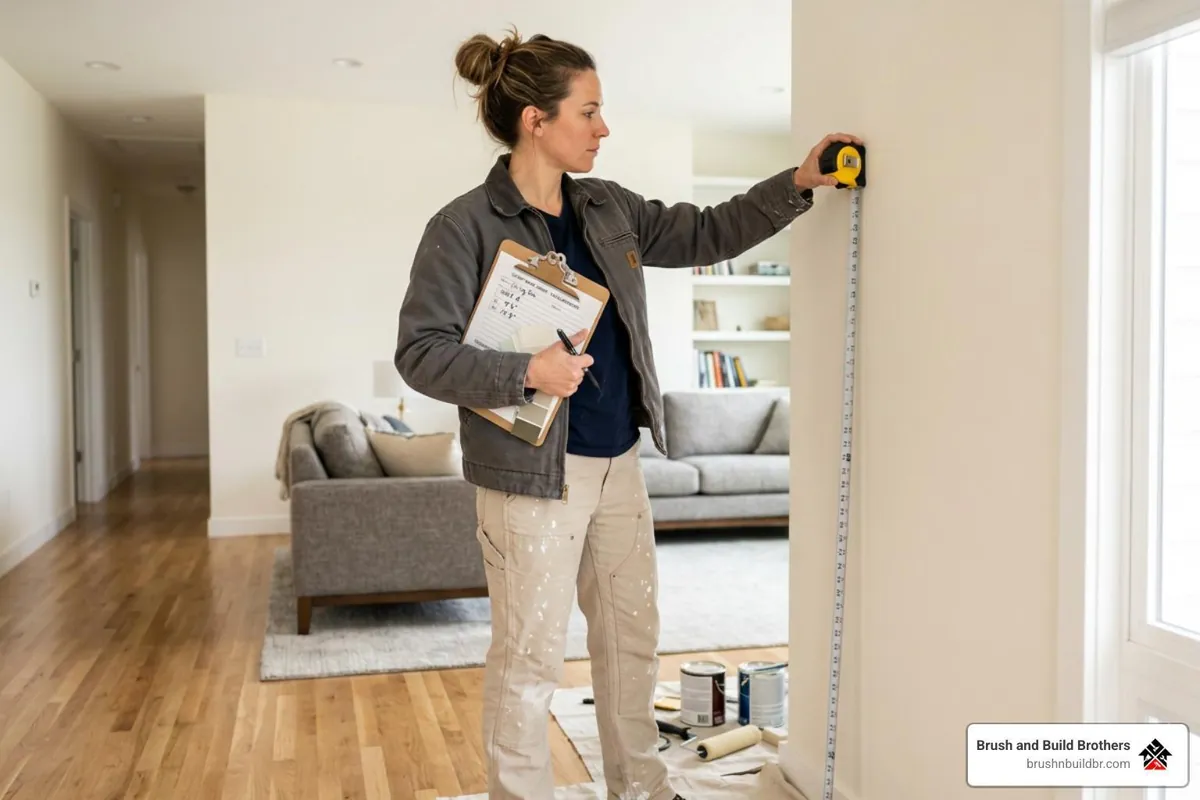
Understanding how a painter calculates an estimate is the best way to tell whether you're being overcharged. Reputable contractors use the surface area method rather than guessing from a floor plan.
To find the paintable wall area of a room:
- Step 1: add the lengths of all the walls to get the room's perimeter.
- Step 2: multiply the perimeter by the ceiling height. For example, a 12x12 room with 8-foot ceilings has a 48-foot perimeter; 48 x 8 = 384 square feet of wall.
- Step 3: subtract areas that won't be painted. A common rule of thumb is about 16 square feet per window and 21 square feet per door.
With two windows and one door, you'd subtract 53 square feet from 384, leaving 331 square feet of paintable wall.
If a contractor quotes a flat rate from your floor plan without looking at wall heights or layout, they may be overcharging you, or underestimating the job, which leads to awkward conversations and surprise fees later.
Why the Cost per Square Foot Varies by Surface
Different surfaces need different care, finishes and techniques, which is why quotes often price them separately. The ranges below are typical figures you'll see in quotes, for reference only; your price depends on condition, access and local labor rates.
- Walls: the most straightforward part of the job, painted with rollers and brushes. Often around $1 to $3 per square foot of wall surface.
- Ceilings: working overhead with ladders or scaffolding and careful masking takes longer. Often adds around $0.50 to $1.10 per square foot.
- Trim and baseboards: detailed work with fine brushes and extra prep, so it's usually priced by the linear foot, often $1 to $3 per linear foot.
- Doors: removing hardware, sanding, priming and applying a durable finish. Often $50 to $120 per door.
- Crown molding: detail work at height, often $2 to $5 per linear foot.
Key Factors That Influence Your Per-Square-Foot Estimate
No two homes are identical, so two homes with the same square footage can have very different price tags. These factors move an estimate up or down:
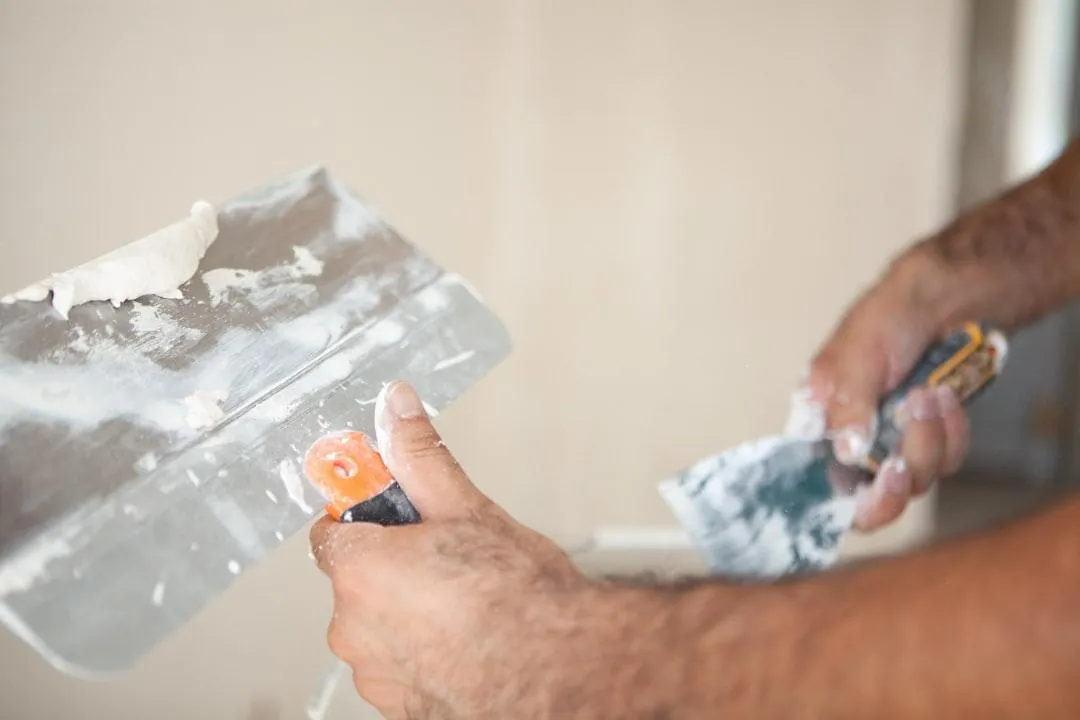
- Prep work: the single biggest variable in labor. Walls in good shape need little prep; peeling paint, water stains, wallpaper removal or extensive drywall cracks can easily double the labor time.
- Ceiling height and access: standard 8-foot ceilings are easy. Vaulted ceilings, stairwells and two-story entryways need specialized ladders, scaffolding and extra safety precautions, which adds to labor.
- Color changes: light to light is easy. Going from dark navy to bright white takes a quality primer plus two or three coats for proper coverage.
- Number of coats: some budget painters quote a single coat to keep the price low. One coat rarely looks good or lasts; a durable finish almost always needs two coats over a properly prepared surface.
How Paint Quality Affects the Price
The paint your contractor buys affects both the upfront quote and how long the job lasts. Paint generally falls into three tiers (shelf prices vary by brand and store):
- Builder-grade / economy (roughly $20 – $35 per gallon): thin, with fewer solids (the part that stays on the wall once the liquid dries). It often needs more coats and is hard to clean without scrubbing the paint off.
- Mid-range (roughly $35 – $55 per gallon): a solid choice for guest bedrooms and low-traffic areas, with decent coverage and durability.
- Premium acrylic (roughly $55 – $90+ per gallon): more pigment and better binders, so it hides dark colors easily, washes well and resists stains. It costs more upfront but usually needs fewer coats and lasts longer between repaints.
Regional Labor Rates and Local Market Differences
Labor rates vary widely across the country, and high-cost coastal metros pay much more. North Carolina is comparatively affordable: PermitDeck puts the average interior painting project here at $3,011, against a national average of about $3,843.
For local pricing, see our Charlotte interior painting and Concord interior painting pages.
Where the Money Goes
To picture where your money goes, here's how a hypothetical $5,000 interior project might roughly break down:
- Labor and prep: the largest share, covering washing, sanding, caulking, masking and painting
- Paint and materials: paint, primer, tape and plastic
- Equipment and overhead: ladders, sprayers, brushes, rollers and insurance
Room-by-room prices depend on size, ceiling height, trim and condition, so ask for an itemized quote that lists each room, the number of coats and the prep included. That's the easiest way to compare bids line by line.
Frequently Asked Questions About Interior Painting Costs
How long does it take to paint a house interior?
A single standard room usually takes a professional crew a day, including prep and two coats. A whole house of around 2,000 to 2,500 square feet typically takes 3 to 5 business days, including a full day of prep: moving furniture, masking floors, patching drywall and sanding, followed by painting and cleanup.
If you're living in the home, it may take slightly longer, since the crew works room by room to keep your daily routine running.
Is it cheaper to DIY or hire a professional painter?
DIY is always cheaper upfront: for a single room you'll mostly pay for paint, rollers, tape and drop cloths.
But DIY has hidden costs: your time, your weekends and the physical strain. A professional job looks different because of the prep. Pros know how to repair drywall seamlessly, cut clean lines along the ceiling and apply paint evenly without roller marks.
With high ceilings, detailed trim or a tight timeline, hiring a professional is almost always worth it.
How often should you repaint interior walls?
Many interior walls look fresh for 5 to 7 years, but wear varies a lot from room to room:
- High-traffic areas (hallways, kitchens, mudrooms): these walls get bumped and scuffed constantly and usually need a refresh sooner.
- Bathrooms: moisture wears paint down faster. A quality semi-gloss or satin finish helps.
- Bedrooms: adult bedrooms can go much longer between repaints. Kids' rooms, thanks to crayons and muddy handprints, often need touch-ups sooner.
Conclusion
The average cost of interior painting per sq ft is a useful guide, but it shouldn't be the only thing you look at. A low quote that cuts corners on prep, uses builder-grade paint or leaves your home a mess isn't a bargain; it's a headache waiting to happen.
At Brush & Build Brothers, we serve Charlotte, Matthews, Mint Hill, Pineville, Huntersville, Concord and the surrounding areas with premium materials, expert craftsmanship and reliable, on-time service. We back our work with a 1-year workmanship warranty because we believe in doing the job right the first time.
Ready to transform your home without the guesswork? Get a free interior painting estimate and see what a stress-free upgrade looks like.