
Beginner's Guide to Exterior House Painting Costs
By Brush & Build Brothers ·
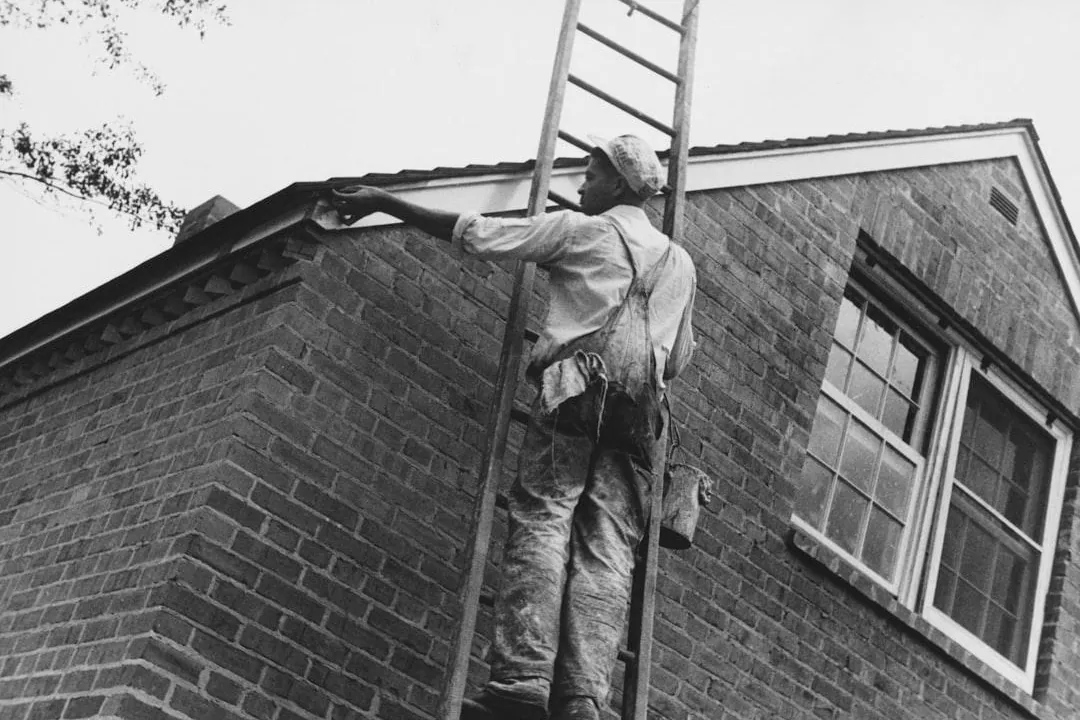
What to Know Before Starting an Exterior House Painting Project
Exterior house painting is one of the highest-impact upgrades you can make: it protects your home from weather damage while boosting curb appeal and resale value.
Here's a quick snapshot of what most homeowners need to know:
| Topic | Quick Answer |
|---|---|
| Typical price per square foot | About $1.50 to $4 (NerdWallet) |
| Average exterior paint job | Just over $3,100 nationally (NerdWallet) |
| How often to repaint | Roughly every 6–12 years, depending on climate and material |
| Best time to paint | Late spring through early fall, in mild, dry weather (roughly 50°F–90°F) |
| Biggest cost driver | Labor and prep, not the paint |
Whether your siding is fading, peeling or just looks tired, repainting involves more than picking a color. You'll need to think about prep work, paint type, local labor rates and whether to hire a pro or do it yourself.
This guide breaks it all down clearly, so you can make a confident, budget-smart decision.
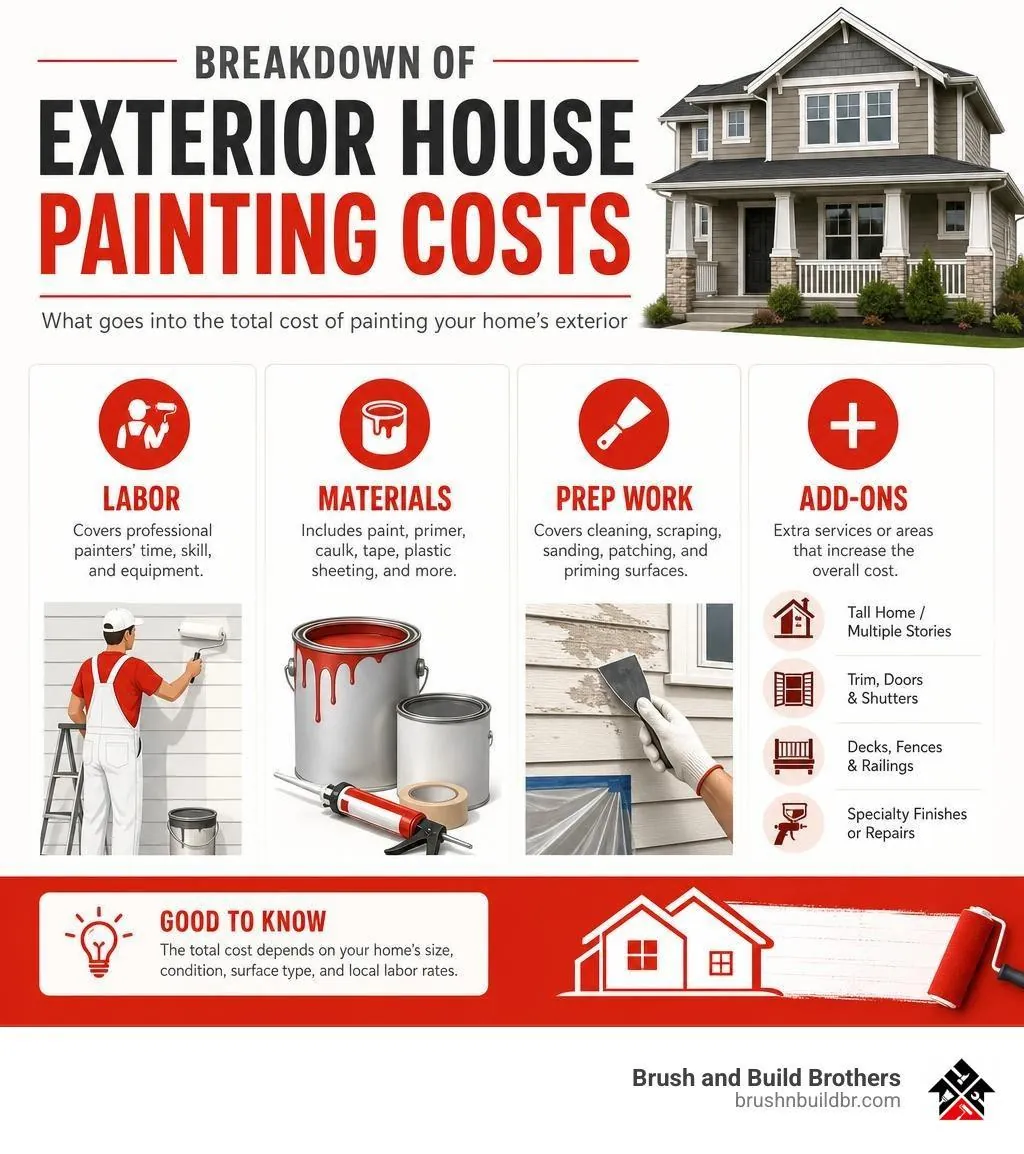
What Factors Influence the Cost of Exterior House Painting?
There's no flat rate for exterior house painting. Every property is different, and several variables shape the final estimate. As a national reference point, NerdWallet puts exterior painting at about $1.50 to $4 per square foot, with an average job just over $3,100.
First is home size and height. A single-story ranch needs far less ladder work and safety equipment than a three-story home. Each additional story adds labor, because scaffolding, lifts and safety setup take time.
Second, labor rates and regional pricing matter a lot. Labor is most of a professional painting quote. Around Charlotte, it depends on local demand, seasonal weather windows and the cost of living.
Planning a project in Charlotte? Our Charlotte exterior painting page explains how local home styles affect pricing.
How Siding Material Affects the Cost
Your siding is one of the biggest cost drivers. Different materials need different prep, primers and amounts of paint.
- Stucco: porous and textured, stucco soaks up far more paint than flat wood or vinyl. It usually needs to be sprayed and back-rolled to push paint into every crevice, plus masonry primer and extra gallons of paint.
- Wood siding: wood needs the most prep. Peeling paint must be scraped, rough edges sanded, damaged or rotten boards replaced and primer applied before painting, so wood often costs more than synthetic materials.
- Vinyl and aluminum siding: fairly straightforward to paint, but they need flexible, vinyl-safe paints that move with temperature swings. Painting vinyl is a cost-effective alternative to replacing it.
- Fiber cement (Hardie board): durable and holds paint very well, with moderate prep.
North Carolina labor rates are competitive. Homeowners in Belmont can explore local options through Belmont exterior painting.
Hidden Costs in Exterior Painting Projects
It's easy to budget only for paint and labor, but a few other costs can come up during the inspection:
- Lead paint: if your home was built before 1978, it may have lead-based paint. Federal rules require lead-safe EPA RRP practices when scraping or sanding it, and the containment and disposal can add significantly to a project.
- Multi-story labor and equipment: homes that need scaffolding, boom lifts or special rigging carry extra equipment costs.
- Wood rot and carpentry repairs: never paint over rotten wood. Damaged trim, fascia and soffits should be repaired first.
- Historic districts and HOAs: in a historic district or an HOA community, you may need a permit or color approval before painting.
If you live in a historic or tightly regulated neighborhood, plan ahead. Homeowners in Huntersville can learn more through Huntersville exterior painting.
DIY vs. Professional Painting
Whether to paint the exterior yourself or hire a pro is a big decision. Saving on labor is tempting, but painting an entire house exterior can be overwhelming.
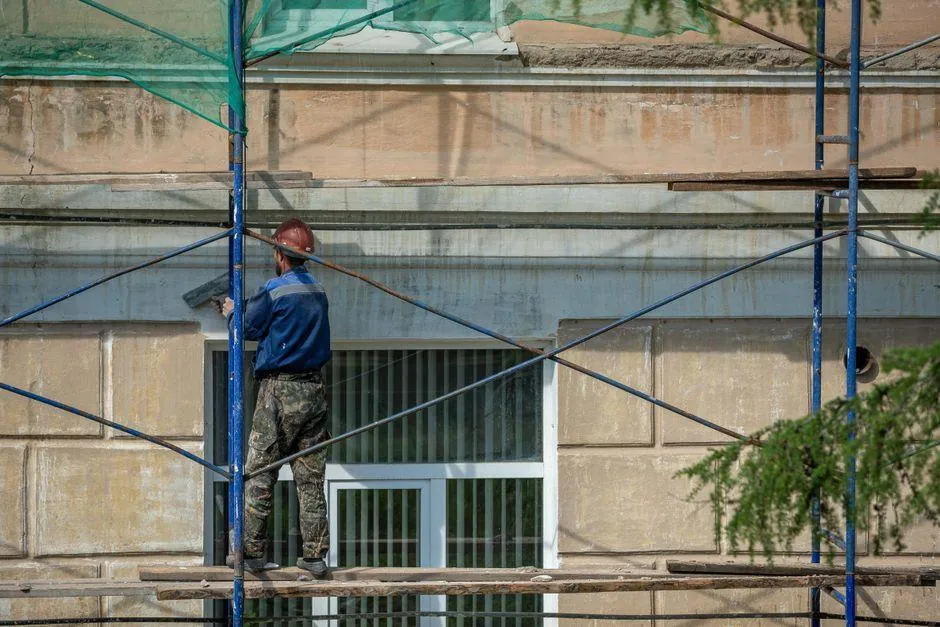
The main trade-offs come down to safety, equipment and your time.
DIY vs. Professional Trade-Offs
- Safety and equipment: professional painters are insured and used to working on tall ladders and scaffolding. For a homeowner, climbing a 28-foot extension ladder with a bucket and brush is risky, and buying or renting safety gear, pressure washers and sprayers eats into DIY savings.
- Time commitment: a professional crew can typically paint an average-sized home in a few days to a week. A solo DIYer working weekends can take a month or more, leaving the house half-prepped and exposed to the weather.
- Quality and durability: a professional job includes careful washing, scraping, caulking and priming, the prep that determines most of how long the paint lasts. Rushed DIY prep can lead to bubbling, peeling or cracking within a year or two.
- Local options: if you go the professional route, compare local reviews. In the southern suburbs, see Pineville exterior painting; in Matthews, see Matthews exterior painting.
Should You Buy the Paint Yourself?
Some homeowners ask whether they can save by buying the paint themselves and hiring a contractor for labor only.
In most cases, we don't recommend it.
Painting contractors usually buy at contractor pricing and know which product suits your siding. Buying your own paint risks the wrong formulation or finish, and if you run short, it means extra trips to the store at full price. Worse, if the paint fails because of the product, the contractor can't warrant work done with material they didn't supply.
In the eastern part of the county, see Mint Hill exterior painting.
Essential Prep Work and Weather Considerations
The secret to a long-lasting paint job is the prep. Premium paint over a dirty, peeling or damp surface is a recipe for failure.
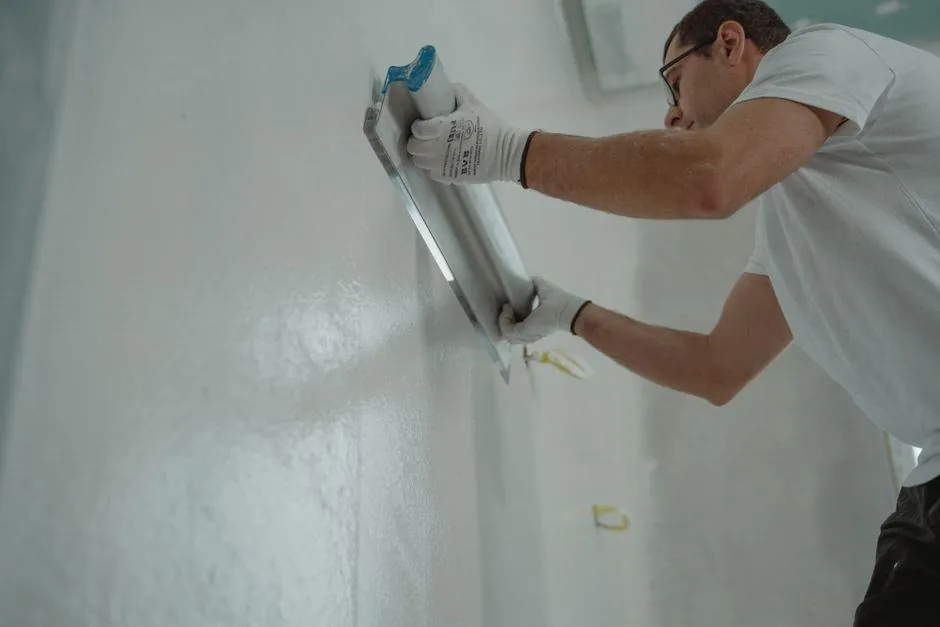
A professional prep process includes:
- Washing: removing dirt, mold, mildew and chalky residue, then letting the house dry completely before the next step.
- Scraping and sanding: removing loose or peeling paint and sanding rough edges so the new paint has a smooth surface to bond to.
- Caulking and sealing: sealing gaps around windows, doors and trim with quality exterior caulk so moisture can't get behind the siding.
- Priming: priming bare wood, stucco and repaired areas to block stains and help the paint adhere evenly.
Homeowners in the Concord area can learn more through Concord exterior painting.
Best Paint Types and Finishes for Stucco and Siding
Choosing the right product matters as much as the prep.
- Acrylic latex paint: the standard for most exteriors. Durable, fade-resistant, flexible enough to handle temperature swings without cracking, and it lets moisture from inside the home escape.
- Elastomeric paint: ideal for stucco and masonry. This thick, rubbery coating bridges small hairline cracks and creates a waterproof barrier.
- Flat / matte sheen: best for hiding imperfections on older siding, but harder to clean.
- Satin / low-luster sheen: the most popular choice for the body of the house, with a slight sheen that resists dirt and washes easily.
- Semi-gloss / gloss sheen: best for trim, shutters and doors, making architectural details pop while staying durable.
In the northern corridor, see Kannapolis exterior painting.
Frequently Asked Questions
How often should exterior paint be reapplied?
Most homes need repainting roughly every 6 to 12 years, depending on the siding, the paint and the local climate.
Wood siding usually needs repainting sooner than fiber cement or painted brick, because wood expands and contracts more. Regular maintenance, like washing your siding once a year and trimming back shrubs, extends the life of the paint job.
How does weather affect exterior painting?
Weather is the boss of any exterior project. Exterior acrylic latex generally goes on best between about 50°F and 90°F with low humidity; check the label for your specific product.
Too cold, and the paint can't cure properly, which leads to early peeling. Too hot, and it dries too fast, leaving brush marks and poor adhesion. High humidity, or painting too close to a rainstorm, can trap moisture under the paint and cause bubbles and blistering.
Conclusion
Professional exterior house painting is one of the smartest ways to protect your home and boost its curb appeal. DIY can save on labor, but the safety risks, equipment and time usually make hiring a professional team the more practical, longer-lasting choice.
Brush & Build Brothers serves communities across the Charlotte metro, including:
- Ballantyne exterior painting
- Mount Holly exterior painting
- Monroe exterior painting
- Locust exterior painting
Key Takeaways
- Preparation is everything: never skip washing, scraping, caulking and priming.
- Let your contractor supply the materials: the right product for your siding, and a warranty that covers the whole job.
- Watch the weather: paint only in dry, mild conditions for proper adhesion.
- Protect your investment: choose a contractor who offers a clear written workmanship warranty.
We back every project with premium materials, expert craftsmanship, reliable on-time service and our 1-year workmanship warranty.
Ready to transform your home's exterior? Visit our Exterior Painting Services page to schedule a free, no-obligation estimate.